Alirahman, A. D., Sumantri, M. S., & Japar, M. (2023). The Development of Islamic Religious Education and Character Materials Online Based in Elementary Schools. Journal of Law and Sustainable Development, 11(6). https://doi.org/10.55908/sdgs.v11i6.550
AlJaberi, O. A., Hussain, M., & Drake, P. R. (2020). A Framework for Measuring Sustainability in Healthcare Systems. International Journal of Healthcare Management, 13(4), 276–285. https://doi.org/10.1080/20479700.2017.1404710
Arwildayanto, Wiyono, B. B., Rusdinal, Dewi, S., Ashokan, V., Wolok, E., & Said, H. (2023). In-service Training Governance, for Elementary School Teachers in Indonesia. Cakrawala Pendidikan, 42(2), 507–524. https://doi.org/10.21831/cp.v42i2.56724
Busetto, L., Wick, W., & Gumbinger, C. (2020). How to Use and Assess Qualitative Research Methods. In Neurological Research and Practice (Vol. 2, Issue 1). https://doi.org/10.1186/s42466-020-00059-z
Damanik, S., & Puspita, S. (2025). Improving the Performance of Education Teachers in the Merdeka Curriculum: the Role of Leadership, School Climate, and Job Satisfaction. Jurnal Ilmiah Ilmu Terapan Universitas Jambi, 9(3), 1055–1065. https://doi.org/10.22437/jiituj.v9i3.43215
Darwanto, A., Prahmana, R. C. I., Susanti, A., & Khalil, I. A. (2024). Transformation of Boarding School Management Models in Enhancing Student Accessibility and Educational Quality. Jurnal Pendidikan Agama Islam, 21(1), 145–164. https://doi.org/10.14421/jpai.v21i1.8632
Dispenza, F., Tarziers, K., Coleman, J. S., & Zeligman, M. (2024). Decolonized and Trauma-Informed Pedagogy in Religion and Spirituality Counseling Competency Training. Spirituality in Clinical Practice, 11(4), 345–353. https://doi.org/10.1037/scp0000331
Faizah, N. (2023). Implementation of Curriculum Management in Improving the Quality of Education at the Integrated Islamic Elementary School in South Tangerang. Al-Ishlah: Jurnal Pendidikan, 15(4), 6305–6320. https://doi.org/10.35445/alishlah.v15i4.4192
Farihin, Suteja, Muslihudin, Aris, Haqq, A. A., & Winarso, W. (2022). A Skill Application Model to Improve Teacher Competence and Professionalism. International Journal of Educational Methodology, 8(2), 331–346. https://doi.org/10.12973/ijem.8.2.331
Fidalgo-Blanco, Á., Sein-Echaluce, M. L., & García-Peñalvo, F. J. (2024). Efficient Teamwork Supervision Using Moodle. In Lecture Notes in Educational Technology: Vol. Part F2959 (pp. 243–251). https://doi.org/10.1007/978-981-97-2468-0_24
Fithriani, Darmiah, Walidin, & Sulaiman. (2024). Professionalism Competency of Public Islamic Senior High School (Man) Teachers in Welcoming the Era of the Industrial Revolution 4.0 in Aceh. Jurnal Ilmiah Islam Futura, 24(2), 561–578. https://doi.org/10.22373/jiif.v24i2.11131
Ge, Y., Zhu, F., Chen, D., Zhao, R., & Li, H. (2020). Self-paced Contrastive Learning with Hybrid Memory for Domain Adaptive Object Re-ID. In Advances in Neural Information Processing Systems (Vols. 2020-Decem).
Hassan, H. A. (2020). Takaful Models: Origin, Progression, and Future. Journal of Islamic Marketing, 11(6), 1801–1819. https://doi.org/10.1108/JIMA-04-2018-0078
Hidayah, H. (2024). Leadership Transformation and Organizational Strengthening in Improving Collaboration and Operational Effectiveness of Islamic Boarding Schools. And EducationISSE: Journal of Social Studies, 01(02), 125–138. https://doi.org/10.61987/jsse.v1i2.519
Hidayati, A., Jalaludin, J., Najikh, M., & Alikhan, M. S. (2025). Curriculum Management Implementation Strategies in Improving the Quality of Madrasah Education. Indonesian Journal of Education and Social Studies, 4(3). https://doi.org/10.33650/ijess.v4i2.12733
Hindaryatiningsih, N., & Munadi, L. O. M. (2025). How to Apply Local Wisdom Value Systems in Management Practices and School Culture? A Study of Internalization and Implementation Practices in School Settings. Journal of Ecohumanism, 4(1), 899–910. https://doi.org/10.62754/joe.v4i1.5892
Ieva, K. P., Beasley, J., & Steen, S. (2021). Equipping School Counselors for Antiracist Healing Centered Groups: A Critical Examination of Preparation, Connected Curricula, Professional Practice and Oversight. Teaching and Supervision in Counseling, 3(2). https://doi.org/10.7290/tsc030207
Joseph, M. M., Thinguri, R., & Muigai, J. (2025). The Paradox of CBC Implementation: Why Does Teacher Training Fail to Translate to Mastery of Curriculum Assessment and Learning Improvement in Public Elementary Schools?. Indonesian Journal of Education and Social Studies, 4(1), 1–15. https://doi.org/10.33650/ijess.v5i1.11288
Kachkar, O., & Yilmaz, M. K. (2023). How Diverse are Shariah Supervisory Boards of Islamic Banks? A Global Empirical Survey. International Journal of Ethics and Systems, 39(2), 312–341. https://doi.org/10.1108/IJOES-10-2021-0195
Loeneto, B., & Oktarina, S. (2022). Teacher Education Research and Development in Indonesia: Preparing Educators for the Twenty-First Century. In Handbook of Research on Teacher Education: Innovations and Practices in Asia (pp. 173–204). https://doi.org/10.1007/978-981-16-9785-2_10
Lucisano, P. (2023). Validation and Standardization of the Questionnaire «Quin – When I Teach». Journal of Educational, Cultural and Psychological Studies, 2023(27), 73–99. https://doi.org/10.7358/ecps-2023-027
Mahanani, P., Akbar, S., & Hussin, Z. B. (2022). Educational Analysis to Develop Character in Malaysia and Indonesia. International Journal of Instruction, 15(3), 377–392. https://doi.org/10.29333/iji.2022.15321
Matsuyama, Y., & Okazaki, H. (2021). Limited Effects from Professional Identity Formation-Oriented Intervention on Self-Regulated Learning in a Preclinical Setting: A Randomized-Controlled Study in Japan. BMC Medical Education, 21(1). https://doi.org/10.1186/s12909-020-02460-3
Moore, R., Gimbert, B. G., & Becce, M. (2024). BELIEVE in Collaboration: Effective Evaluation Partnerships for National Professional Development Projects. TESOL Journal, 15(4). https://doi.org/10.1002/tesj.856
Muhammad, D. H., Umam, C., Fitriani, I., & Zahro, R. (2025). Understanding Learners ’ Characteristics And Islamic Religious Education ( PAI ) Instructional Materials For Determining Learning Activities. Journal of Educational Innovation and Research, 1(11), 435–440. https://doi.org/https://journals.ai-mrc.com/jeir
Mukhibat, M., & Sutoyo, M. (2024). Development and Evaluation of Religious Moderation Education Curriculum at Higher Education in Indonesia. Cogent Education, 11(1). https://doi.org/10.1080/2331186X.2024.2302308
Nailasariy, A., Habibi, B. Y., Kubro, K., Nurhaliza, & Setyaningrum, A. R. (2023). Implementation of the Design for Change (DFC) Method through Project-Based Learning in Developing Intrapersonal and Interpersonal Skills of Islamic Religious Education Students. Jurnal Pendidikan Agama Islam, 20(1), 132–149. https://doi.org/10.14421/jpai.v20i1.6668
Ndari, W., & Mahmudah, F. N. (2023). Implementation of the Merdeka Curriculum and Its Challenges. European Journal of Education and Pedagogy Www.Ej-Edu.Org RESEARCH, 4(3), 111–116. https://doi.org/10.24018/ejedu.2023.4.3.648
Nechifor, A. (2024). Gamified Romanian for Specific Purposes: A Journey to Engaged Language Acquisition. Analele Universitatii Ovidius Constanta, Seria Filologie, 35(2), 348–371.
Negara, T. N. (2026). Analysis of the Love-Based Curriculum Lesson Plan for Islamic Cultural History in Grade 8 Islamic Junior High School (MTs): The History of the Establishment of the Abbasid Caliphate. AL-IDARAH: Journal of Islamic Education Management, 1(1), 1–14.
Nisa, K., Imron, A., & Nada Salym, A. Q. (2024). Increasing Teacher Professionalism Through the Implementation of Digital Academic Supervision in Indonesian Secondary School: Personal Learning Networks as Mediator. Journal of Infrastructure, Policy and Development, 8(8). https://doi.org/10.24294/jipd.v8i8.6420
Nuranifah, Harun, C. Z., & Usman, N. (2022). Management of Strengthening Islamic Character Education in Senior High School. Jurnal Ilmiah Peuradeun, 10(3), 629–640. https://doi.org/10.26811/peuradeun.v10i3.659
Nurhasanah, Hastuti, W. S., & Prabowo, A. (2020). Collaborative Classroom Action Research for Mathematics and Science Teachers in Indonesia. In Journal of Physics: Conference Series (Vol. 1613, Issue 1). https://doi.org/10.1088/1742-6596/1613/1/012024
Onia, S. I., & Hussen, B. T. (2024). Enhancing the Quality of Education through Effective Governance in Higher Education. Indonesian Journal of Education and Social Studies, 3(2). https://doi.org/10.33650/ijess.v3i2.8908
Puspitasari, Y., & Rofiqoh. (2021). The Sustainable Impacts of Teacher Action Research on Efl Teachers in Indonesia. Studies in English Language and Education, 8(3), 952–971. https://doi.org/10.24815/siele.v8i3.21388
Rachman, A., Kawakip, A. N., Fadhillah, F., Saputra, N., & Zulkifli, Z. (2023). Building Religious Character of Students in Madrasah Through Moral Learning. Tafkir: Interdisciplinary Journal of Islamic Education, 4(1), 78–94. https://doi.org/10.31538/tijie.v4i1.261
Robson, S. M., & Trabulsi, J. (2020). Qualitative Research on the Real-Time Decision Making of WIC Participants While Food Shopping: Use of Think-Aloud Methodology. Journal of the Academy of Nutrition and Dietetics, 120(1), 111–119. https://doi.org/10.1016/j.jand.2019.05.009
Rohlfsen, C. J., & Cannella, A. C. (2020). Innovation in Early Medical Education, No Bells or Whistles Required. BMC Medical Education, 20(1). https://doi.org/10.1186/s12909-020-1947-6
Shikuku, D. N., & Ameh, C. (2024). Experiences, Barriers and Perspectives of Midwifery Educators, Mentors and Students Implementing the Updated Emergency Obstetric and Newborn Care-Enhanced Pre-Service Midwifery Curriculum in Kenya: A Nested Qualitative Study. BMC Medical Education, 24(1). https://doi.org/10.1186/s12909-024-05872-7
Sobeck, E. E., Douglas, S. N., & Uitto, D. J. (2024). Supporting Paraeducators in Special Education and Inclusive Settings. In Supporting Paraeducators in Special Education and Inclusive Settings. https://doi.org/10.4324/9781003526636
Solihin, M., & Wijaya, A. (2024). Teacher Challenges in Implementing the Independent Curriculum: Strengthening HOTS in Religious Learning. Indonesian Journal of Education and Social Studies, 3(1), 1–11. https://doi.org/10.33650/ijess.v3i1.7085
Sukiman, Baroroh, U., Nugraheni, A. S., & Sama-Alee, A. (2024). Innovation of the Internship Program and Its Implications for the Soft Skill Development of Prospective Islamic Religious Education Teachers at Sunan Kalijaga State Islamic University, Yogyakarta. Jurnal Pendidikan Agama Islam, 21(1), 165–185. https://doi.org/10.14421/jpai.v21i1.7583
Sundari, A. (2021). Extracurricular Activities Management in Improving Students’ Non-Academic Achievement. Munaddhomah, 2(1), 1–8. https://doi.org/10.31538/munaddhomah.v2i1.45
Tobroni, Yunus Abu Bakar, M., Firmansyah, E., & Abdeljelil, M. Ben. (2024). Legal Framework Analysis of Islamic Religious Education Policy Implementation. International Journal of Law and Society, 3(3), 217–237. https://doi.org/10.59683/ijls.v3i3.143
Tohet, M., & Nuraini, F. (2026). More Than Teaching Values: Teacher Exemplarity and Moral Formation through the Figurative Learning Model. Indonesian Journal of Education and Social Studies, 5(1), 40–55. https://doi.org/10.33650/ijess.v5i1.13087
Tunsisa, B. (2025). School Leaders’ Commitment to Improving Students’ Academic Performance in Secondary Schools of Sidama Regional State, Ethiopia. International Journal of Educational Organization and Leadership, 32(1), 53–79. https://doi.org/10.18848/2329-1656/CGP/v32i01/53-79
Usman, H., & Fajarianto, O. (2024). Explore the Needs of Competency Development Model for Prospective Elementary School Teachers Based on Knowledge Management System in Indonesia. Revista de Gestao Social e Ambiental, 18(1). https://doi.org/10.24857/RGSA.V18N1-148
Usman, T. (2025). Exploring Islamic-Oriented Cooperative Learning through Faith-Driven Collaboration in among University Students in Islamic Education Courses. International Journal of Learning, Teaching and Educational Research, 24(9), 922–939. https://doi.org/10.26803/ijlter.24.9.44
Werdiningsih, R. (2024). Role of the Supervision of The School Principal in Improving the Quality of Learning at State Elementary sSchool’s Post-Pandemic COVID-19. International Journal of Education and Practice, 12(2), 217–239. https://doi.org/10.18488/61.v12i2.3674

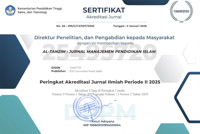







 (Universitas Islam An-Nadwah Kuala)
