Adigun, T. A., & Onayinka, T. S. (2024). Academic Anxieties, Environmental Factors and Lecturers' Productivity in Nigeria. African Journal of Educational Management, Teaching and Entrepreneurship Studies, 11(1 SE-), 14–25.
Adu-Boateng, S., & Goodnough, K. (2022). Examining A Science Teacher's Instructional Practices in the Adoption of Inclusive Pedagogy: A Qualitative Case Study. Journal of Science Teacher Education, 33(3), 303–325. https://doi.org/10.1080/1046560X.2021.1915605
Alagaraja, M. (2023). Perspectives on Servant Leadership: Examining the Life and Impact of Sri Ramakrishna Paramahamsa. In The Palgrave Handbook of Servant Leadership (Vol. 2, pp. 1083–1104). https://doi.org/10.1007/978-3-031-01323-2_65
Bellibaş, M. Ş., Gümüş, S., & Liu, Y. (2021). Does School Leadership Matter for Teachers' Classroom Practice? The Influence of instructional Leadership and Distributed Leadership on Instructional Quality. School Effectiveness and School Improvement, 32(3), 387–412. https://doi.org/10.1080/09243453.2020.1858119
Chu, H. C., Chang, M. K., & Chen, Y. C. (2024). Meta-Analysis of Emotional Labour. Bulletin of Educational Psychology, 55(4), 847–874. https://doi.org/10.6251/BEP.202406_55(4).0009
Damanik, S., Mesnan, & Puspita, S. (2025 Improving the Performance of Education Teachers in the Merdeka Curriculum: The Role of Leadership, School Climate, and Job Satisfaction. Jurnal Ilmiah Ilmu Terapan Universitas Jambi, 9(3), 1055–1065. https://doi.org/10.22437/jiituj.v9i3.43215
Day, C. W., Simpson, A., Li, Q., Bi, Y., & He, F. (2023). Teacher Professionalism: Chinese Teachers' Perspectives. Journal of Professional Capital and Community, 8(2), 65–89. https://doi.org/10.1108/JPCC-01-2022-0004
Dignath, C., & Kunter, M. (2022). Teachers' Beliefs About Inclusive Education and Insights on What Contributes to Those Beliefs. Educational Psychology Review, 34(4), 2609–2660. https://doi.org/10.1007/s10648-022-09695-0
Donohue, R., Cooper, B., Cieri, H. De, Sheehan, C., & Shea, T. (2026). Role Overload and Safety Incidents: An Examination of the Individual- and Team-Level Buffering Effects of Psychological Safety. Safety Science, 193, 107008. https://doi.org/https://doi.org/10.1016/j.ssci.2025.107008
Fasinro, K. (2024). Curriculum Implementation: Challenges and the Prospect of Education Resource Centres to Aid Effective Implementation. African Educational Research Journal, 12(1), 1–5. https://doi.org/10.30918/aerj.121.23.102
Fawaid, A., Hamzah, M., Rohimah, Munawwaroh, I., & Putri, D. F. (2025). AI-based Career Management to Improve the Quality of Decision Making in Higher Education. 2025 15th IEEE Integrated STEM Education Conference, ISEC 2025, 1–8. https://doi.org/10.1109/ISEC64801.2025.11147274
Goodyear, P., & Yeoman, P. (2021). Activity-Centred Analysis and Design (ACAD): Core Purposes, Distinctive Qualities and Current Developments. Educational Technology Research and Development, 69(2), 445–464.
Gunawan, M. A., Anwar, K., Prasetyo, M. A. M., & Purwandari, E. (2023). Study of Leadership Style on Employee Performance (Organizational Motivation and Commitment). In AIP Conference Proceedings (Vol. 2736, Issue 1). https://doi.org/10.1063/5.0171021
Gurgenidze, M., Makaradze, N., & Sheleiko, V. A. (2022). Enhancing Teachers' Digital Competence for Professional Development in Distance Mode. In Communications in Computer and Information Science: Vol. 1619 CCIS (pp. 277–291). https://doi.org/10.1007/978-3-031-14985-6_20
Halkias, D., Neubert, M., Thurman, P. W., & Harkiolakis, N. (2022a). The Multiple Case Study Design: Methodology and Application for Management Education. In The Multiple Case Study Design: Methodology and Application for Management Education. Routledge. https://doi.org/10.4324/9781003244936
Halkias, D., Neubert, M., Thurman, P. W., & Harkiolakis, N. (2022b). The Multiple Case Study Design. The Multiple Case Study Design. https://doi.org/10.4324/9781003244936
Hartnell, C. A., Christensen-Salem, A., Walumbwa, F. O., Stotler, D. J., Chiang, F. F. T., & Birtch, T. A. (2023). Manufacturing Motivation in the Mundane: Servant Leadership's Influence on Employees' Intrinsic Motivation and Performance. Journal of Business Ethics, 188(3), 533–552. https://doi.org/10.1007/s10551-023-05330-2
Herlina, M. G., Budiansyah, M. A., Janah, F. R., & Adryana, D. Q. P. (2024). Unlocking Employee Innovative Behavior: Exploring the Power of Transformational Leadership and Tacit Knowledge Sharing Among Indonesian White-Collar Workers. Economics and Culture, 21(1), 29–45. https://doi.org/10.2478/jec-2024-0003
Holmén, J., & Holmberg, J. (2021). Student-led Sustainability Transformations: Employing Realist Evaluation to Open the Black Box of Learning in a Challenge Lab Curriculum. International Journal of Sustainability in Higher Education, 22(8), 1–24. https://doi.org/10.1108/IJSHE-06-2020-0230
Hu, J., Xiong, L., Zhang, M., & Chen, C. (2023). The Mobilization of Employees' Psychological Resources: How Servant Leadership Motivates Pro-Customer Deviance. International Journal of Contemporary Hospitality Management, 35(1), 115–136. https://doi.org/10.1108/IJCHM-02-2022-0198
Imbert Romero, D., Rebollo, C., & Otero, L. (2024). Formative Research in Teacher Training: A Case Study Carried Out in Uruguay. International Journal of Educational Research, 125. https://doi.org/10.1016/j.ijer.2024.102345
Kurien & George (2024). Digital Transformation in Professional Education: Status, Standards and Strategies for Airport Operation Courses. In Studies in Big Data (Vol. 159, pp. 27–38). https://doi.org/10.1007/978-3-71213-5_3
Lima, L., de Oliveira Martins, A., Estrela, E., & Duarte, R. S. (2024). Challenges Posed to Leadership: A Systematic Review Based on the Relationships between Curricular Autonomy and Teachers' Well-Being. In Frontiers in Education (Vol. 9). https://doi.org/10.3389/feduc.2024.1520947
Madkour, M., & Alaskar, H. (2024). Exploring Cognitive Teaching Approaches for Inclusive Translation Online Classes: A Case Study During the COVID-19 Pandemic. Theory and Practice in Language Studies, 14(4), 1219–1230. https://doi.org/10.17507/tpls.1404.29
Martanti, F., Fatkhuronji, M., Husna, A., & Maskur. (2023). Improving Student Well-Being Aspects through teachers' instructional creativity in Islamic Elementary Schools. MUDARRISA: Jurnal Kajian Pendidikan Islam, 15(2), 215–242. https://doi.org/10.18326/mudarrisa.v15i2.383
Mundiri, A., Najiburrohman, N., Jali, H., & Putri, D. F. (2026). Beyond the Motive: Lessons Learned from Work Commitment Based on Pesantren. Jurnal Ilmiah Peuradeun, 14(1), 97–122. https://doi.org/10.26811/peuradeun.v14i1.1825
OECD. (2025). Results from TALIS 2024: The State of Teaching. OECD Publishing. https://doi.org/10.1787/90df6235-en
Prummer, K., Human-Vogel, S., Graham, M. A., & Pittich, D. (2024). The Role of Mentoring in Developing Leaders' Emotional Intelligence: Exploring Mentoring Types, Emotional Intelligence, Organizational Factors, and Gender. Frontiers in Education, 9(June), 1–16.
Puspitasari, Y., Widiati, U., Marhaban, S., Sulistyo, T., & Rofiqoh. (2021). The Sustainable Impacts of Teacher Action Research on EFL Teachers in Indonesia. Studies in English Language and Education, 8(3), 952–971. https://doi.org/10.24815/siele.v8i3.21388
Putri, D. F., & Ghufron, M. I. (2026). Community Cooperatives: Public Policy Instruments for Poverty Alleviation Achieving Distributive Social Justice. Islamic Finance and Economic Insights, 2(3), 130–141.
Rasdiana, Wiyono, B. B., Imron, A., & Maharmawan, M. A. (2024). Elevating Teachers' Professional Digital Competence: Synergies of Principals' Instructional E-Supervision, Technology Leadership and Digital Culture for Educational Excellence in Digital-Savvy Era. Education Sciences, 14(3). https://doi.org/10.3390/educsci14030266
Rawal, D. M. (2024). Mapping of School Teachers’ Digital Competency in the Context of Digital Infrastructure: A Systematic Review and Empirical Study of India. Journal of Professional Capital and Community, 9(3), 173–195. https://doi.org/10.1108/JPCC-01-2024-0016
Singhal, D., & Salunkhe, H. A. (2024). An Analysis of Factors Associated with Employee Satisfaction in Information Technology Companies. International Journal of Human Capital in Urban Management, 9(1), 135–156. https://doi.org/10.22034/IJHCUM.2024.01.10
Suhendra, A., Rosidah, & Harefa, H. Y. (2024). Innovative Government Transformation in the Equalisation of Teachers and Education Personnel. Tafkir: Interdisciplinary Journal of Islamic Education, 5(2), 217–234. https://doi.org/10.31538/tijie.v5i2.513
Sum, R. K. W., Wallhead, T., & Liu, Y. (2022). Effects of Teachers' Participation in Continuing Professional Development on Students' Perceived Physical Literacy, Motivation and Enjoyment of Physical Activity. Revista de Psicodidáctica, 27(2), 176–185. https://doi.org/10.1016/j.psicod.2022.04.004
Syahmalini, S., Alawi, D. K., & Ariyadi, B. (2022). The Effect of Reward-Punishment System and Work Culture on Teacher Job Satisfaction. Development: Studies in Educational Management and Leadership, 1(2), 169–184. https://doi.org/10.47766/development.v1i2.640
UNESCO, & 2030, I. T. F. on T. for E. (2024). Global Report on Teachers: Addressing Teacher Shortages and Transforming the Profession. UNESCO.
Zamroni, Fatmasari, R., Rasyidi, Baharun, H., Windiyani, T., & Putri, D. F. (2025). Artificial Intelligence as a Tool to Improve the Quality of Job-Ready Graduate Skills in Higher Education. Proceedings of the 2025 IEEE International Conference on Industry 4.0, Artificial Intelligence, and Communications Technology, IAICT 2025, 129–136. https://doi.org/10.1109/IAICT65714.2025.11101572

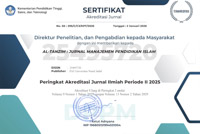








 (Universitas Islam An Nur Lampung)

