Akram, H., Raza, M., Jan, M. F., Aslam, S., & Nivin-Vargas, L. (2024). Identified Leadership Practices and Teachers' Professional Development in Karachi, Pakistan: The Moderation Effect of Training. Education 3-13, 52(8), 1309–1326. https://doi.org/10.1080/03004279.2022.2146455
Alhalwachi, L., & Slade, H. (2025). Leveraging AI and Automation to Streamline Recruitment in the Food and Beverage Industry. 2025 International Conference on Computer and Applications (ICCA), 1–8. IEEE.
https://doi.org/10.1109/ICCA66035.2025.11430837
Amirudin, N., Anwar, K., Ifadah, A. S., Sya'bani, M. A. Y., & Basri, H. (2025). Analysis of Learning Evaluation Issues Affecting Educational Goal Achievement in Islamic Education. International Research Journal of Multidisciplinary Scope, 6(4), 299–312.
https://doi.org/10.47857/irjms.2025.v06i04.05800
Arya, D. (2025). Optimizing Human Resource Management to Promote Sustainable Educational Development: Insights from Bageshwar District. International Journal of Advanced Research and Interdisciplinary Scientific Endeavours, 3(6), 1148–1165. https://doi.org/10.61359/11.2206-2566
Aydarova, E. (2023). Knowledge for the Elites, Competencies for the Masses: Political Theatre of Educational Reforms in the Russian Federation. In Contextualizing Global Flows of Competency-Based Education (pp. 51–66). Routledge. https://doi.org/10.4324/9781003435242-4
Baluch, A., Scholarios, D., Cunningham, I., James, P., Jendro, E., & Johnstone, S. (2025). Addressing Contextual Pressures and Challenges in Social Care: The Prospects of Multi-Actor Engagement with Strategic HRM. Human Resource Management, 64(6), 1747–1765. https://doi.org/10.1002/hrm.70000
Becher, A. (2022). When Context Meets Knowledge in University Professional Education: Organizational Factors Influencing Coherence in Teaching and Social Work. Higher Education, 83(3), 577–595.
https://doi.org/10.1007/s10734-021-00680-0
Burke, B. M., & Ceo-DiFrancesco, D. (2022). Recruitment and Retention of World Language Teacher Education Majors: Perspectives of Teacher Candidates and Alumni to Remedy a Global Shortage. Foreign Language Annals, 55(2), 333–360. https://doi.org/10.1111/flan.12613
Castro, A. J. (2023). Managing Competing Demands in a Teacher Shortage Context: The Impact of Teacher Shortages on Principal Leadership Practices. Educational Administration Quarterly, 59(1), 218–250.
https://doi.org/10.1177/0013161X221140849
Ceresia, F. (2025). The Contribution of Sustainable Human Resource Management to International Trade Governance. Sustainability, 17(16), 7550.
https://doi.org/10.3390/su17167550
Coleman-King, C., Rosser, B. D., & Sanford, C. M. (2023). Beyond the Institution: An Informal Partnership Endeavored toward Understanding and Addressing Black Teacher Recruitment and Retention. The Urban Review, 55(4), 433–455. https://doi.org/10.1007/s11256-023-00656-7
Entekhabi, M. (2024). Enhancing Recruitment Strategies in Developing Nations: A Sustainability-Focused Approach. Cross-Cultural Management Journal, 26(2), 127–137. https://doi.org/10.70147/c26127137
Fletcher, D., & Trautrims, A. (2024). Recruitment Deception and the Organization of Labor for Exploitation: A Policy-Theory Synthesis. Academy of Management Perspectives, 38(1), 43–76.
https://doi.org/10.5465/amp.2022.0043
Fomba, B. K., Talla, D. N. D. F., & Ningaye, P. (2023). Institutional Quality and Education Quality in Developing Countries: Effects and Transmission Channels. Journal of the Knowledge Economy, 14(1), 86–115.
https://doi.org/10.1007/s13132-021-00869-9
Godspower, D. A. (2025). Merit-Based Recruitment and Employee Effectiveness: A Bivariate Study of Selected Southern Nigerian Public Enterprises. Future Business Journal, 11(1), 1–13.
https://doi.org/10.1186/s43093-025-00687-4
Gress, D. R., & Shin, J. (2024). Perceptual Differences Between Expatriate Faculty and Senior Managers Regarding Acculturation at a Korean University. The Social Science Journal, 61(2), 429–443.
https://doi.org/10.1080/03623319.2020.1813863
Grevisse, Y. R. (2026). A Multidimensional Competency-Based Framework for Defining the Optimal Military Profile in the Democratic Republic of the Congo. American Journal of Arts and Human Science, 5(2), 1–10.
https://doi.org/10.54536/ajahs.v5i2.3732
Hantoro, R. R., Yamin, M., & Rosadi, K. I. (2024). A Competency-Based Analysis of Human Resource Development Among Educators at Salafiyah Islamic Boarding Schools. Manageria: Jurnal Manajemen Pendidikan Islam, 9(2), 195–212. https://doi.org/10.14421/manageria.2024.92-06
Hasanah, N. Z., & Istiqomah, I. (2023). Management of Islamic Education Learning in TPA Activities at the Nurul Iman Pakem Mosque. Ta'dib: Jurnal Pendidikan Islam, 12(1), 113–122.
https://doi.org/10.29313/tjpi.v12i1.9824
Hirsh, D. A., Crampton, P. E. S., & Osman, N. Y. (2024). Applying Self-Determination Theory to Stem Medical Schools' Clinical Teacher Sustainability Crisis. Medical Education, 58(1), 118–128.
https://doi.org/10.1111/medu.15181
Hoque, K. E., & Atheef, M. (2024). A Review of Human Resource Management Practices and Their Impact on School Performance (2012–2022). Human Resources Management and Services, 6(1), 3392.
https://doi.org/10.18282/hrms.v6i1.3392
Ibrahim, U., & Gustiawan, D. (2025). The Effect of Recruitment, Selection, and Training on the Performance of Meeting the Quality Standards of the Uniqueness of Integrated Islamic Schools Mediated by Organizational Commitment. Eduvest–Journal of Universal Studies, 5(5), 5563–5582.
https://doi.org/10.59188/eduvest.v5i5.44763
Karoso, S., Handayaningrum, W., Handayani, E. W., & Yanuarti, S. (2024). The Role of Human Resource Management Strategy in Creating Superior Quality Educators. Nidhomul Haq: Jurnal Manajemen Pendidikan Islam, 9(3), 596–615. https://doi.org/10.31538/ndhq.v9i3.7
Kim, A. (2026). Impact of Systematic Support in Teacher Education and Professional Development on Training-Teaching Alignment and Instructional Quality. Journal for STEM Education Research, 9(1), 33–58.
https://doi.org/10.1007/s41979-025-00154-3
Knappert, L., & Budhwar, P. (2023). Staffing Effectiveness Across Countries: An Institutional Perspective. Human Resource Management Journal, 33(1), 17–46.
https://doi.org/10.1111/1748-8583.12411
Kokkinopoulou, E., Vrontis, D., & Thrassou, A. (2026). The Impact of Education on Productivity and Externalities of Economic Development and Social Welfare: A Systematic Literature Review. Central European Management Journal, 34(1), 89–112. https://doi.org/10.1108/CEMJ-04-2024-0124
Koutsoklenis, A., & Papadimitriou, V. (2024). Special Education Provision in Greek Mainstream Classrooms: Teachers' Characteristics and Recruitment Procedures in Parallel Support. International Journal of Inclusive Education, 28(5), 561–576. https://doi.org/10.1080/13603116.2021.1942565
Kumar, S. (2025). Education 4.0: Transforming Learning for the Fourth Industrial Revolution. Higher Education for the Future, 12(2), 144–162.
https://doi.org/10.1177/23476311251326140
Latt, K. M., & Wei, G. (2025). How Teacher Efficacy and Receptivity Affect the Perceived Outcomes of Curriculum Reform in Myanmar Basic Education. European Journal of Education, 60(1), e70022.
https://doi.org/10.1111/ejed.70022
Lee, S. W., & Mao, X. (2023). Recruitment and Selection of Principals: A Systematic Review. Educational Management Administration & Leadership, 51(1), 6–29.
https://doi.org/10.1177/1741143220969694
Lim, W. M., Adi Badiozaman, I. F., & Leong, H. J. (2023). Unravelling the Expectation-Performance Gaps in Teacher Behaviour: A Student Engagement Perspective. Quality in Higher Education, 29(3), 302–322.
https://doi.org/10.1080/13538322.2022.2090746
Liu, T., & Li, W. (2025). Enhancing Teacher Recruitment and Retention Through Decision-Making Models in Education Systems. Scientific Reports, 15(1), 15247. https://doi.org/10.1038/s41598-025-00161-9
Lubi, R., Sintyasari, D., Yanuar, H., Sumayyah, M., Sumasta, M. S., Wati, C. R., … Sitorus, N. R. (2026). Cross-Sector Analysis of Human Resource Recruitment, Selection, and Placement: A Multi-Site Study in Industrial and Higher Education Organizations. Journal of General Education and Humanities, 5(3), 4381–4400. https://doi.org/10.58421/gehu.v5i3.1625
Lucksnat, C., Richter, E., Henschel, S., Hoffmann, L., Schipolowski, S., & Richter, D. (2024). Comparing the Teaching Quality of Alternatively Certified Teachers and Traditionally Certified Teachers: Findings From a Large-Scale Study. Educational Assessment, Evaluation and Accountability, 36(1), 75–106.
https://doi.org/10.1007/s11092-023-09426-1
Luo, H., & Li, W. (2025). Impact of Microlearning on Developing Soft Skills of University Students Across Disciplines. Frontiers in Psychology, 16, 1491265.
https://doi.org/10.3389/fpsyg.2025.1491265
Mahsusi, Hudaa, S., Fahmi, M., Kusen, Haryanti, N. D., & Wajdi, M. B. N. (2024). Achieving Excellence: The Role of Digital Transformation in Madrasah Management and Islamic Culture. Cogent Arts & Humanities, 11(1), 2304407.
https://doi.org/10.1080/23311983.2024.2304407
Mardhiah, M., Musgamy, A., & Lubis, M. (2023). Teacher Professional Development Through the Teacher Education Program (PPG) at Islamic Education Institutions. International Journal of Learning, Teaching and Educational Research, 22(11), 80–95. https://doi.org/10.26803/ijlter.22.11.5
Mugwaze, F., & Smith, C. (2024). Rethinking the Role of the Principal in the Strategic Management of Human Capital in Public Secondary Schools in Zimbabwe. SAGE Open, 14(3), 21582440241254604.
https://doi.org/10.1177/21582440241254604
Mukhtara, N. A., Noorb, M. A. M., Majidc, N. A. A., Azilla, N., & Zailand, N. R. Z. (2025). Challenges in Teachers' Performance Appraisal: A Qualitative Study on Structural Flaws and Systemic Inequities. International Business and Education Journal, 18(2), 99–111. https://doi.org/10.37134/ibej.Vol18.2.8.2025
Nguyen, T. D., & Springer, M. G. (2023). A Conceptual Framework of Teacher Turnover: A Systematic Review of the Empirical International Literature and Insights From the Employee Turnover Literature. Educational Review, 75(5), 993–1028. https://doi.org/10.1080/00131911.2021.1940103
Orgianus, Y., Oemar, H., Praseytaningsih, E., & Amalia, H. K. (2024). Islamic Values in Lecturer Competency Development: A Systematic Literature Review of Trends, Frameworks, and Impacts in Islamic Higher Education. Jurnal Pendidikan Islam, 13(1), 69–83. https://doi.org/10.14421/jpi.2024.131.69-83
Permatasari, N., & Tandiayuk, S. (2023). Human Resource Management in Education: Optimizing Teacher Performance for Better Learning Outcomes. Golden Ratio of Mapping Idea and Literature Format, 3(1), 35–59.
https://doi.org/10.52970/grmilf.v3i1.354
Putri, M., Munawarsya, M., & Santika, S. (2024). The Effectiveness of Human Resource Management in Improving the Quality of Madrasah Aliyah Nurul Muttahidah Pinotu. Idarah: Jurnal Pendidikan dan Kependidikan, 8(1), 79–94.
https://doi.org/10.47766/idarah.v8i1.3079
Qingyan, G., Azar, A. S., & Ahmad, A. (2023). The Impact of Teacher Quality Management on Student Performance in the Education Sector: Literature Review. World Journal of English Language, 13(3), 156–171.
https://doi.org/10.5430/wjel.v13n3p156
Rhinesmith, E., Anglum, J. C., Park, A., & Burrola, A. (2023). Recruiting and Retaining Teachers in Rural Schools: A Systematic Review of the Literature. Peabody Journal of Education, 98(4), 347–363.
https://doi.org/10.1080/0161956X.2023.2238491
Roisah, S. (2026). Teacher Recruitment and Selection Process as a Strategy for Strengthening Human Resources at Ash Shiddiiqi Integrated Islamic School. Journal of Educational Sciences, 10(4), 636–649.
Rojniruttikul, N. (2025). Human Resource Management Strategies for Sustainable Development in Higher Education Institutions in Thailand. Review of Integrative Business and Economics Research, 14(2), 435–449.
Salman, S., Walidin, W., Zulfikar, T., & Bahri, S. (2026). Policy Gaps in the Development of Islamic Religious Education Teacher Professionalism in Aceh's Special Autonomy Context. QALAMUNA: Jurnal Pendidikan, Sosial, dan Agama, 18(1), 771–786. https://doi.org/10.37680/qalamuna.v18i1.9322
Sarangi, P., Mishra, R., & Padhi, A. (2025). Balancing Skills and Expectations: AHP Analysis of Competency-Based Recruitment in the EdTech Sector. Future Business Journal, 11(1), 57. https://doi.org/10.1186/s43093-025-00483-0
Shaoan, M. M. R., Namanyane, T., Feng, M., & Arif, M. (2025). A Systematic Literature Review on the Importance of Teacher Recruitment and Retention in Global Educational Reform. Frontiers in Education, 9, 1447752. Frontiers Media SA. https://doi.org/10.3389/feduc.2024.1447752
Sukmara, A. R. (2026). The Impact of Competency-Based Interviews on Employee Selection Results. Influence: International Journal of Science Review, 8(1), 24–29.
Sundowo, E., Ananda, R., & Dahlan, Z. (2026). Human Resource Transformation at Al-Jam'iyatul Washliyah Educational Institution: Multi-Site Research. Journal La Edusci, 7(1), 130–150. https://doi.org/10.37899/journallaedusci.v7i1.2872
Syukron, B., Fatonah, I., & Masitoh, D. (2026). Integrating Tradition and Modernity in Islamic Education Management in Indonesian Madrasahs. Kharisma: Jurnal Administrasi dan Manajemen Pendidikan, 5(1), 218–237.
https://doi.org/10.59373/kharisma.v5i1.144
Tao, L., & Weng, T. (2026). Dancing With Shackles: Exploring Two Chinese High School English Teachers' Restricted Agency in Implementing Core Competencies From an Ecological Lens. TESOL Quarterly, 60(1), 218–260.
https://doi.org/10.1002/tesq.70034
Trinh, N. T. H. (2023). Higher Education and Its Role for National Development: A Research Agenda With Bibliometric Analysis. Interchange, 54(2), 125–143.
https://doi.org/10.1007/s10780-023-09493-9
Ul Hassan, M., Murtaza, A., & Rashid, K. (2025). Redefining Higher Education Institutions (HEIs) in the Era of Globalisation and Global Crises: A Proposal for Future Sustainability. European Journal of Education, 60(1), e12822.
https://doi.org/10.1111/ejed.12822
Umami, I. O. N., & Yasin, M. (2024). Integrating Islamic Ethical Values Into Human Resource Development: Enhancing Educational Quality in Indonesian Islamic Schools. Dirosatuna: Journal of Islamic Studies, 7(2), 99–110.
https://doi.org/10.31538/dirosatuna.v7i2.7683
Yang, Y., & Chang, Y.-C. (2023). A Study on the Relationship Between Teacher Competency and Job Performance Under Human Resource Management in Higher Education. Educational Research and Reviews, 18(8), 203–217.
https://doi.org/10.5897/ERR2023.4337

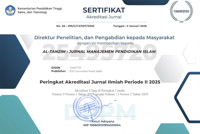








 (Universitas Islam Negeri Sulthan Thaha Saifuddin Jambi)
