Ahmed, S. K., Mohammed, R. A., Nashwan, A. J., Ibrahim, R. H., Abdalla, A. Q., M. Ameen, B. M., & Khdhir, R. M. (2025). Using thematic analysis in qualitative research. Journal of Medicine, Surgery, and Public Health, 6, 100198. https://doi.org/10.1016/j.glmedi.2025.100198
Ayana, R. S., Nordianingsih, M., Sari, T. N., Dakir, D., & Baehaqi, L. (2025). Analysis of Academic Ability Test (TKA) Policy at SMAN 1 and SMAN 2 Palangka Raya. Tadrib: Jurnal Pendidikan Agama Islam, 11(2), 500–506. https://doi.org/10.19109/tadrib.v11i2.32567
Clinton‐Lisell, V. (2021). Stop multitasking and just read: Meta‐analyses of multitasking’s effects on reading performance and reading time. Journal of Research in Reading, 44(4), 787–816. https://doi.org/10.1111/1467-9817.12372
Emden, M., Sumfleth, E., & Schüßler, K. (2026). Beyond Problem Solving: Designing Concept-Building Worked Examples for Chemistry Education. The Electronic Journal for Research in Science & Mathematics Education, 30(2), 165–192.
Estaphan, S., Kramer, D., & Witchel, H. J. (2025). Navigating the frontier of AI-assisted student assignments: Challenges, skills, and solutions. Advances in Physiology Education, 49(3), 633–639. https://doi.org/10.1152/advan.00253.2024
Fatahillah, A., Liyandri, V. A., & Monalisa, L. A. (2021). Senior High School Students’ Higher Order Thinking Skills in Solving Combinatorics Problems. Jurnal Pendidikan Matematika, 16(1), 89–102. https://doi.org/10.22342/jpm.16.1.15121.89-102
Hidajat, F. A. (2024). Buku Ajar: Pengembangan Asesmen Kinerja dan Evaluasi Pembelajaran Untuk Konstruksi Berpikir Kreatif Matematika. CV Eureka Media Aksara.
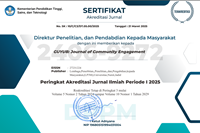
Islam, S., Azizah, N., Qomariyah, R., Fitria, A., Hamidah, N., & Masrufah, M. (2021). PKM Pendampingan Speaking Skill dengan Metode TROPIG di Wilayah Al Hasyimiyah Pondok Pesantren Nurul Jadid. GUYUB: Journal of Community Engagement, 2(2), 202–210. https://doi.org/10.33650/guyub.v2i2.2170
Liu, J., Lin, X., Bayer, J., Dillies, Y., Jiang, W., Liang, X., Soletskyi, R., Wang, H., Xie, Y., Xiong, B., Yang, Z., Zhang, J., Zhi, L., Li, J., & Liu, Z. (2025). CombiBench: Benchmarking LLM Capability for Combinatorial Mathematics (arXiv:2505.03171). arXiv. https://doi.org/10.48550/arXiv.2505.03171
Manapeng, C. C. (2026). Narratives of Monitoring, Evaluation, and Technical Assistance in Multigrade Classrooms of Educational Leaders and Teachers in Sagada District. Journal of Education, Learning, and Management, 3(2), 119–127. https://doi.org/10.69739/jelm.v3i2.1927
Meccawy, M. (2022). Creating an Immersive XR Learning Experience: A Roadmap for Educators. Electronics, 11(21), 3547. https://doi.org/10.3390/electronics11213547
Nadila, D., Mandailina, V., Mahsup, Mehmood, S., Abdillah, & Syaharuddin. (2023). Improved Problem-Solving Skills Using Mathematics Module. Mosharafa: Jurnal Pendidikan Matematika, 12(2), 405–418. https://doi.org/10.31980/mosharafa.v12i2.798
Nur Fadila, R., Mahmudi, A., & Rosnawati, R. (2026). Improving Students’ Interest in Mathematics Learning through Problem-Based Learning with Worked Examples and Interactive Quizzes on SPLDV. Jurnal Inovasi Matematika, 8(1), 15–32. https://doi.org/10.35438/inomatika.v8i1.551
Ovadiya, T. (2026). Beyond Problem-Solving: Interactive Worked Examples as Pathways to Dual Teacher Expertise. Journal of Intelligence, 14(9), 203. https://doi.org/10.3390/jintelligence14090203
Permana, H., Bakri, F., Muliyati, D., Mutoharoh, M., Primasari, N., & Sabrina, P. M. (2025). Empowering Science Teachers through STEM-Based Teaching Module Development Training. Mitra Teras: Jurnal Terapan Pengabdian Masyarakat, 4(1), 59–66. https://doi.org/10.58797/teras.0401.06
Putra, Putra, E. D., Slamin, S., Department of Computer Science, University of Jember, Jember, Indonesia, Kristiana, A. I., Department of Math. Education Postgraduate, University of Jember, Jember, Indonesia, Suwito, A., & Department of Math. Education Postgraduate, University of Jember, Jember, Indonesia. (2024). Development of Combinatorial Thinking Ability Questions for Students. International Journal of Current Science Research and Review, 07(09). https://doi.org/10.47191/ijcsrr/V7-i9-58
Sinaga, B., Sitorus, J., & Situmeang, T. (2023). The influence of students’ problem-solving understanding and results of students’ mathematics learning. Frontiers in Education, 8, 1088556. https://doi.org/10.3389/feduc.2023.1088556
Szabo, Z. K., Körtesi, P., Guncaga, J., Szabo, D., & Neag, R. (2020). Examples of Problem-Solving Strategies in Mathematics Education Supporting the Sustainability of 21st-Century Skills. Sustainability, 12(23), 10113. https://doi.org/10.3390/su122310113
Tomar, V., Bansal, M., & Singh, P. (2024). Metaheuristic Algorithms for Optimization: A Brief Review. Engineering Proceedings, 59(1), 238. https://doi.org/10.3390/engproc2023059238
Uripno, G., Yuliastuti, R., Nurfalah, E., & Islami, I. F. (2024). Berpikir Kombinatorik: Relevansi AI dengan Model Pembelajaran Matematika. Jurnal Teladan: Jurnal Ilmu Pendidikan dan Pembelajaran, 9(2), 77–86. https://doi.org/10.55719/jt.v9i2.1510





.png)



 (Universitas Brawiaya)

