Abas, M. C., & Kholidah, N. D. (2025). Improving Brand Awareness Of Educational Institutions Through Educational Personnel Recruitment Management In Madrasah. At-Tarbiyat, 8(2025).
Albustomi, A. Y., & Baharun, H. (2025). The Significance Of Spiritual Leadership In Redefining The Culture Of Sustainable Quality: The Process Of Internalizing Values. TIME Journal: Transformation Of Islamic Management And Education Journal, 2(1), 41–51.
Azaroh, S. (2025). Implementasi Model Problem Based Learning Untuk Meningkatkan Hasil Belajar Siswa Pada Materi Larangan Mengkonsumsi Minuman Keras. Journal Of Pedagogical And Teacher Professional Development, 2(1), 122–139.
Barokah, M. (2025). Management Of Learning Outcomes Through SIJAGU PAI Design And Implementation Of A Digital Reporting System For Islamic Religious Education. Journal Of Educational Management Research, 4(2), 845–860.
Donkoh, S., & Mensah, J. (2023). Application Of Triangulation In Qualitative Research. Journal Of Applied Biotechnology And Bioengineering, 10(1), 6–9. https://doi.org/10.15406/jabb.2023.10.00319
Hefniy, H., & Alwahedi, M. A. A. (2025). Virtual School Tours: Boosting Community Interest And Attracting Prospective Students. EVALUASI: Jurnal Manajemen Pendidikan Islam, 9(2), 340–353. https://doi.org/10.32478/3gtzvf72
Hennink, M., & Kaiser, B. N. (2022). Sample Sizes For Saturation In Qualitative Research: A Systematic Review Of Empirical Tests. Social Science & Medicine, 292, 114523. https://doi.org/10.1016/j.socscimed.2021.114523
Holidi, M. (2025). CBT Exam Implementation Guidance For Students In Facing Digital-Based Assessments. Communautaire: Journal Of Community Service, 4(3), 297–312. https://doi.org/10.61987/communautaire.v4i3.820
Khofsah, S. (2025). Management Of The Habit Of Reading The Qur'an As An Effective Memorization Strategy For Tahfidz Class Students At Madrasahs. Journal Of Education Management And Policy, 1(3), 198–207.
Listrianti, F. (2020). Transformation Of Curriculum Development Based On Nationality-Oriented. Jurnal Ilmiah Peuradeun, 8(1), 37. https://doi.org/10.26811/peuradeun.v8i1.380
Manshur, U. (2026). Madrasah Vision Management Strategy In Realizing Superior Educational Quality. EDUCARE: Jurnal Ilmu Pendidikan, 5(1), 1–15. https://doi.org/10.71392/ejip.v5i1.122
Meydan, C. H., & Akkaş, H. (2024). The Role Of Triangulation In Qualitative Research: Converging Perspectives. In Principles Of Conducting Qualitative Research In Multicultural Settings (pp. 98–129). IGI Global. https://doi.org/10.4018/979-8-3693-3306-8.ch006
Mundir, A., Baharun, H., Soniya, S., & Hamimah, S. (2022). Childhood Behavior Management Strategy Based On Fun Learning Environment. Jurnal Obsesi: Jurnal Pendidikan Anak Usia Dini, 6(4), 2583–2595. https://doi.org/10.31004/obsesi.v6i4.2063
Munif, M., Rufaida, R., & Lama, A. V. (2025). Optimizing Student Participation With Gamification Learning Media: A Study Of Digital-Based Structural Gamification. Cendekia: Jurnal Kependidikan Dan Kemasyarakatan, 23(2). https://doi.org/10.21154/cendekia.v23i2.11640
Mustafa, M., & Maulana, M. Z. (2024). Learning Innovation: Improving Educational Effectiveness In The Digital Age. Proceeding Of International Conference On Education, Society And Humanity, 2(2), 720–726.
Najiah, L. (2025). Implementation Of Total Quality Management (TQM) As A Continuous Improvement Model In Educational Management: Implementasi Total Quality Management (TQM) Sebagai Model Perbaikan Berkelanjutan Dalam Pengelolaan Pendidikan. JEMINOV (Journal Of Education Management And Innovation, 1(2), 14–23.
Naningsih, E., Hidayah, F., & Aniati, A. (2024). Enhancing Learning Quality: The Role Of Teacher Competence In Madrasah. Jurnal At-Tarbiyat: Jurnal Pendidikan Islam, 7(3).
Niam, M. F., Rumahlewang, E., Umiyati, H., Dewi, N. P. S., Atiningsih, S., Haryati, T., … Fathin, S. (2024). Metode Penelitian Kualitatif.
Rahman, F. S., Nu'man, A., & Iskandar. (2023). Developing Student Moderation Attitudes Through Self-Control-Based Class Management. Profesi Pendidikan Dasar, 10(1), 1–14. https://doi.org/10.23917/ppd.v10i1.21644
Rahman, M. (2026). Improving The Quality Of Education In Madrasah Tsanawiyah Through Digital Technology-Based Strategic Management. JETech: Journal Of Education And Technology, 2(1), 11–19.
Rosaliza, M., Asriwandari, H., & Indrawati, I. (2023). Field Work: Etnografi Dan Etnografi Digital. Jurnal Ilmu Budaya, 20(1), 74–103. https://doi.org/10.31849/jib.v20i1.15887
Saleha, L., & Sholihah, C. (2024). Eco-Friendly Media: Assistance In Developing Educational Props From Waste Materials In Probolinggo City. GUYUB: Journal Of Community Engagement, 5(1), 249–271. https://doi.org/10.33650/guyub.v5i1.8317
Salmona, M., & Kaczynski, D. (2024). Qualitative Data Analysis Strategies. In How To Conduct Qualitative Research In Finance (pp. 80–96). Edward Elgar Publishing. https://doi.org/10.4337/9781803927008.00012
Shoha, S. I. (2026). Curriculum Renewal Management In Elementary Schools: A Case Study Of The Implementation Of The Independent Curriculum In Schools. Journal Of Education Management And Policy, 2(1), 61–71.
Sholehah, P. M., & Ichsan, M. (2025). Development Of Study House Jember Learning Guidance Management Application Using The Django Framework. MJTI: Multidisciplinary Journal Of Technology And Informatics, 1(2), 57–65.
Thohir, P. F. D. M. (2024). Strengthening The Reputation Of Islamic Boarding Schools: The Role Of Leadership, Educational Innovation, And Local Wisdom. Managere: Indonesian Journal Of Educational Management, 6(3), 331–346. https://doi.org/10.52627/managere.v6i3.720
Wagner, D. A. (2025). Learning As Development: Rethinking International Education In A Changing World. Taylor & Francis. https://doi.org/10.4324/9781003400370
Yakin, A. (2025). Transforming Organizational Culture In Islamic Educational Institutions: Cultivating A Quality-Oriented Learning Environment For Academic Excellence. Journal Of Educational Management Research, 4(4), 1711–1731.

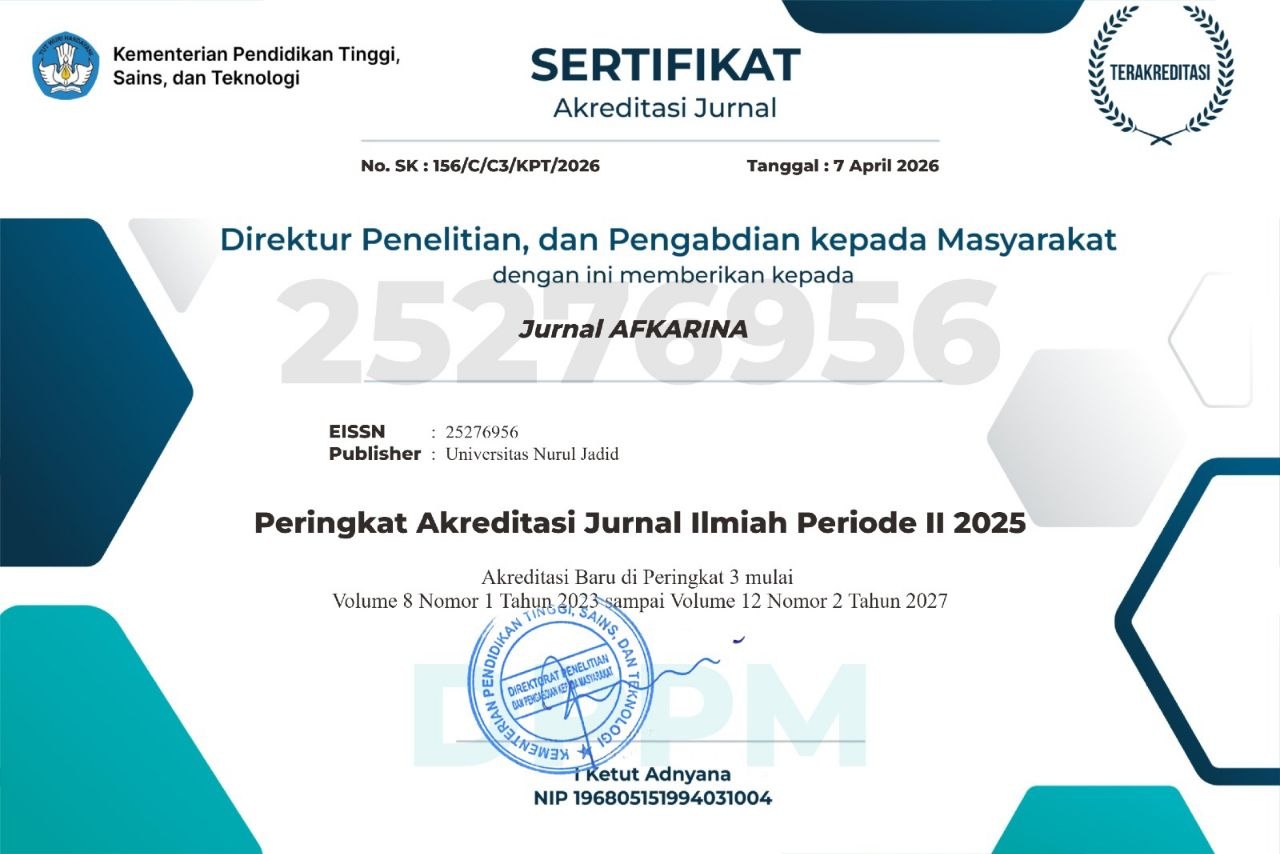




 (Universitas Nurul Jadid)

